


 ENG
ENG 中文简体
中文简体 русский
 عربى
عربىIf you are specifying a PMMA sheet line, a profile line, or a compounding line for acrylic pellets, the first decision is not the screw diameter. It is the heat history. PMMA, or polymethyl methacrylate, is often called acrylic, and it behaves like a high-clarity engineering thermoplastic until it is overheated, over-sheared, or fed with too much moisture. Then it can turn yellow, form gels, or produce bubbles that ruin optical quality.
The practical conclusion is simple: an acrylic PMMA extrusion line should be selected by torque density, screw geometry, vacuum venting, feeding accuracy, temperature control, and pelletizing method, not by motor kilowatts alone. This guide explains what PMMA is, where extrusion fits, which line details matter, and what to verify before purchase.
Content
- 1 What Acrylic PMMA Is and Why It Is Extruded
- 2 PMMA Grades and Processing Window
- 3 Twin-Screw Extrusion: Where PMMA Lines Succeed or Fail
- 4 Compounding and Pelletizing Choices for Acrylic PMMA
- 5 Downstream Equipment and Finishing Quality
- 6 Key Specifications, Tolerances, and Procurement Risks
- 7 FAQ: Acrylic PMMA Extrusion and Equipment
What Acrylic PMMA Is and Why It Is Extruded
PMMA is a transparent thermoplastic made from methyl methacrylate. It is valued for optical clarity, stiffness, outdoor weather resistance, and surface hardness. According to published polymer datasheets, general-purpose PMMA typically has a density around 1.17 to 1.20 g/cm3, light transmission near 92%, and a heat deflection temperature often in the 80 to 100 °C range, depending on grade. It is not the same as polycarbonate: PMMA is clearer and more scratch-resistant, but it is more brittle and less impact-resistant.
Extrusion matters because not every PMMA product is cast. Cast PMMA sheets are made by pouring monomer between glass plates. Extruded PMMA sheets, profiles, tubes, and compounds are made by melting and shaping polymer pellets. Extrusion gives faster cycles, tighter thickness control, and easier continuous production. For compounders, a twin-screw extruder can also blend PMMA with impact modifiers, UV stabilizers, colorants, or other polymers.
PMMA Grades and Processing Window
Acrylic PMMA is not one single recipe. General-purpose grades focus on clarity and stiffness. Impact-modified grades trade some clarity for toughness. Heat-resistant grades raise the softening point but narrow the processing window. Extrusion grades are usually supplied as pellets and may already contain lubricants or stabilizers. The table below summarizes typical buyer considerations, not fixed specifications.
| Grade type | Common use | Extrusion caution |
|---|---|---|
| General-purpose PMMA | Optical sheet, display, lighting | Moisture drying and low shear are critical |
| Impact-modified PMMA | Signage, profiles, durable parts | Lower melt temperature helps preserve impact strength |
| Heat-resistant PMMA | Automotive trim, lenses, industrial covers | Narrower window; avoid dead spots and over-heating |
| Extrusion-grade PMMA | Sheet, pipe, profile, pelletizing | Consistent feed and vacuum venting improve clarity |
A practical starting point for many PMMA extrusion grades is drying at 80 to 100 °C for 2 to 4 hours, then processing with melt temperatures roughly between 200 and 250 °C. Those numbers are not universal. A heat-resistant grade may need the upper end, while an impact-modified grade may prefer the lower end. The important point is that PMMA has little tolerance for moisture and excessive shear heat.
Typical values from public polymer datasheets; grade, thickness, and measurement method affect results.
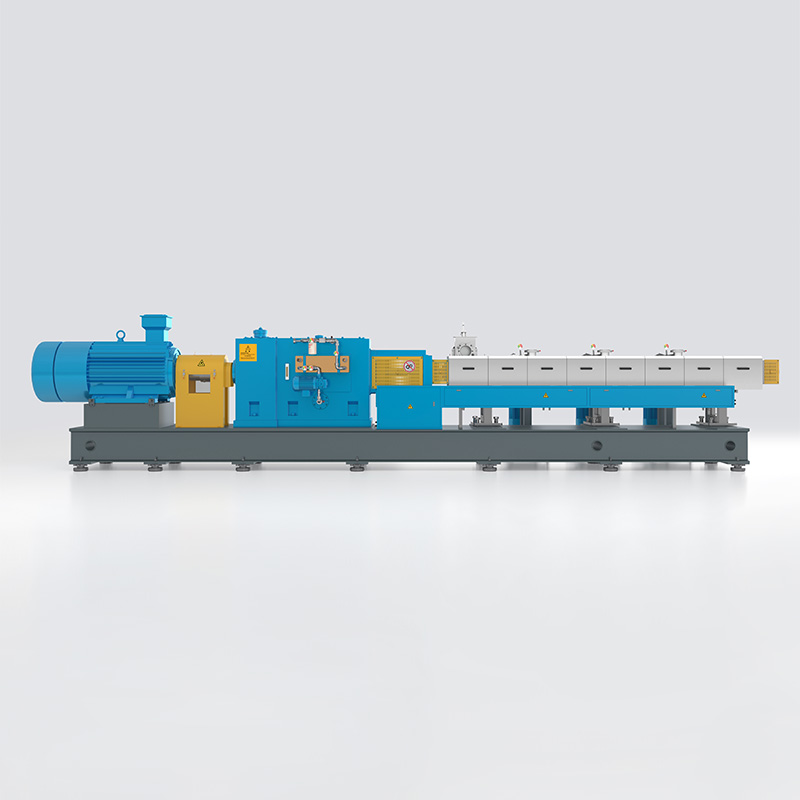 KTS High Performance Series Engineering Plastic Extrusion LineThe KTS High Performance Series page lists ten engineering-plastic extrusion models with Do/Di, specific torque, speed, and power data for controlled melting.View Product →
Twin-Screw Extrusion: Where PMMA Lines Succeed or Fail
In twin-screw extrusion, PMMA is usually processed in one of two ways: direct extrusion of sheet or profile, or compounding and pelletizing before a second shaping step. Both routes depend on controlled melting. PMMA has high melt viscosity, so it generates shear heat quickly. If the screw configuration is too aggressive, the polymer can degrade before the operator sees a temperature alarm.
A successful PMMA line typically includes: a gravimetric feeder for consistent dosing; a drying system upstream; a co-rotating twin-screw extruder with a moderate shear screw profile; vacuum venting for moisture and volatiles; a melt pump or screen changer when pressure stability matters; and a pelletizer or die system matched to the target product. For compounding, specific torque is a useful indicator. KUNWEI states that it has designed twin-screw extruders with specific torque up to 14 Nm/cm3 for the compounding industry. Higher torque density can allow more output per screw size, but it also requires better screw cooling and process control.
Schematic only. Actual line layout depends on output, pellet form, and downstream shaping.
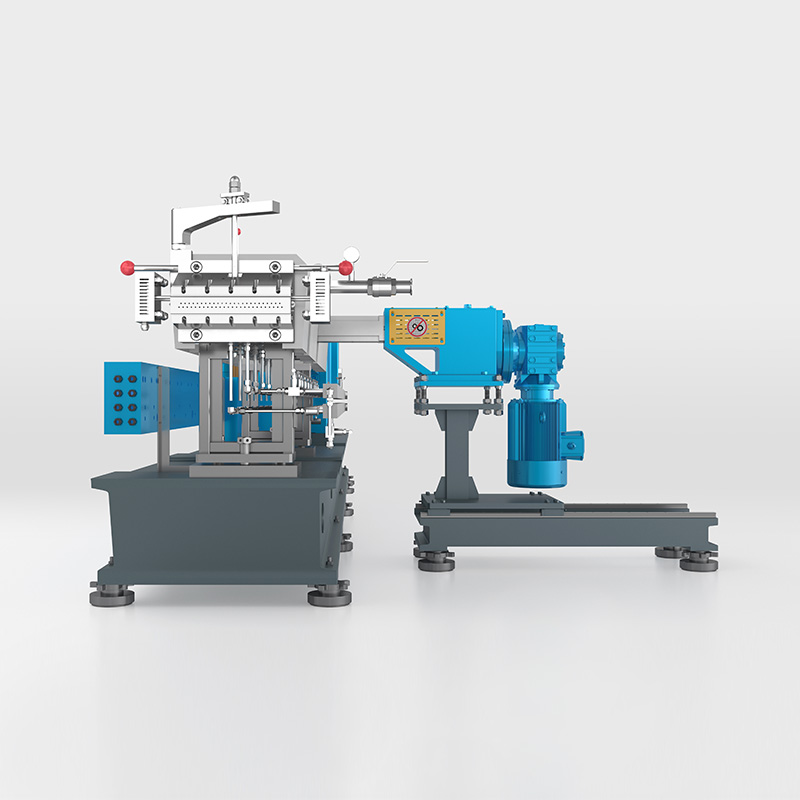 KTD High Volume Twin-Screw Extruder Production LineKTD High Volume Series page lists models and torque, speed, and power data for high-torque compounding of filled, reactive, or shear-sensitive materials.View Product →
Compounding and Pelletizing Choices for Acrylic PMMA
When PMMA is compounded, the goal is uniform dispersion without destroying molecular weight. A co-rotating twin-screw extruder with modular screw elements lets the processor balance conveying, melting, mixing, and venting. For high filler or additive loadings, a side feeder can add mineral fillers or reinforcing agents downstream, after the polymer has already melted. That reduces screw wear and avoids feeding problems.
Pelletizing is the next decision. Strand pelletizing gives good visual inspection and works well for many PMMA compounds, but it requires careful cooling. Underwater pelletizing produces round pellets and can handle higher output, yet it needs a clean die face and stable melt pressure. Water-ring hot-face cutting is another option for certain compounds. A used or existing line can sometimes be upgraded rather than replaced; for example, an engineering plastic pelletising line can be reworked with new screw elements, feeders, and controls when the polymer portfolio changes.
Buyers should ask for a trial run with their own PMMA grade. The trial should measure output, melt temperature, torque, vacuum level, pellet shape, and yellowing. If the supplier cannot show how the line handles moisture and shear heat, the quotation is incomplete.
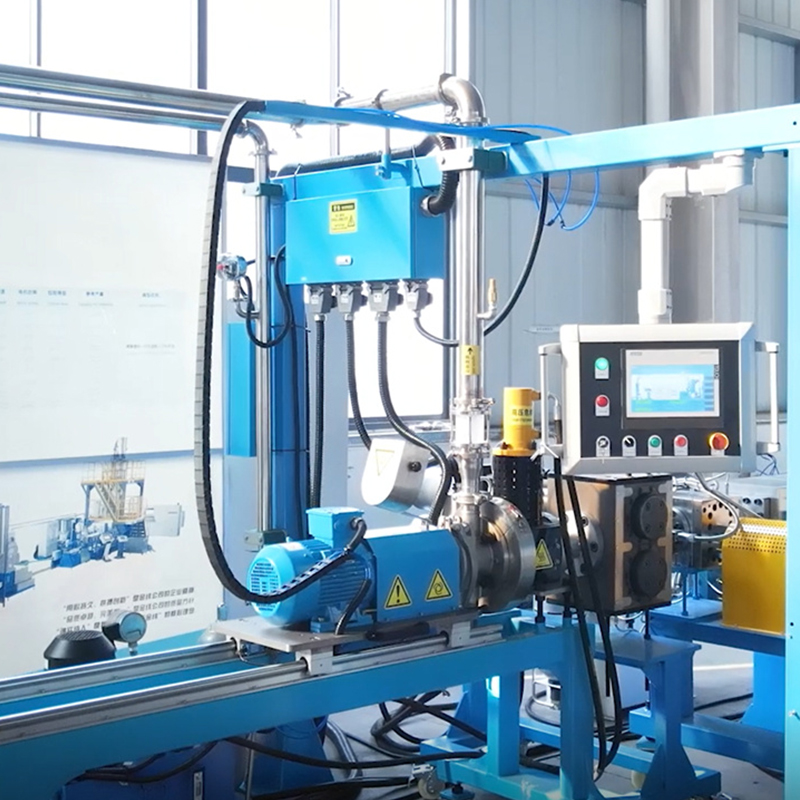 Underwater Pelletizing System for Screw Extruder Downstream LinesUnderwater die-face pelletizing cuts melt into granules in circulating water, helping reduce dust and support cooling-water reuse.View Product →
Downstream Equipment and Finishing Quality
PMMA pellets and sheets are judged visually. A line that produces acceptable mechanical properties but visible black specks, bubbles, or color shift will still fail in the market. Downstream equipment therefore deserves as much attention as the extruder. Feeding accuracy affects formulation consistency. Vacuum venting affects bubble and gel levels. Filtration affects specks. Cutting and cooling affect pellet shape and dust.
For sheet and profile extrusion, the die, calendering, cooling, and haul-off system determine thickness tolerance and surface finish. For compounding, the pelletizer, water system, and classifier determine bulk density and downstream feeding behavior. A PMMA line often needs a dedusting or sieving step, because fines can cause feeding surges and optical defects. The best procurement approach is to define the final product first, then work backward to screw design and downstream equipment.
Key Specifications, Tolerances, and Procurement Risks
PMMA extrusion is less forgiving than many commodity polymers, so specifications should be written with tolerances. A practical specification might require melt temperature stability within plus or minus 3 °C, vacuum venting capable of reaching a defined vacuum level, pellet length variation within a stated range, and screw elements made from wear-resistant material when fillers are used. The exact numbers depend on the grade, output, and product.
Common procurement risks include comparing only motor power, ignoring specific torque; underestimating drying and venting; selecting a pelletizer without testing the melt; and accepting a screw design copied from a different polymer. A PMMA compound can look fine at low output and fail at full rate. For that reason, acceptance testing should include a sustained run at target output, not a short demonstration.
Also review service access. PMMA lines need frequent cleaning during grade changes. Barrel liners, screw elements, die plates, and pelletizer blades should be accessible without excessive downtime. Spare parts availability matters, especially for vacuum seals, heating elements, and cutter hubs. A second-hand or refurbished line can be attractive, but only if the screw geometry and controls are re-engineered for acrylic. A masterbatch twin-screw extrusion pelletising line upgrade can illustrate how feeding, mixing, and pelletizing sections are adapted when the material changes.
FAQ: Acrylic PMMA Extrusion and Equipment
Q1: What is acrylic PMMA used for?
PMMA is used for signage, lighting covers, display sheets, automotive trim, medical devices, and optical parts. It is also compounded into pellets for extrusion and injection molding.
Q2: Is PMMA the same as acrylic?
Yes, in everyday use acrylic usually means PMMA. Strictly, acrylic is a family of polymers, while PMMA is the most common transparent acrylic plastic.
Q3: Can PMMA be extruded?
Yes. Extruded PMMA sheet, profile, tube, and pellet products are common. The key is controlled drying, moderate shear, and stable melt temperature.
Q4: What is the difference between cast and extruded PMMA?
Cast PMMA is made by pouring monomer into molds or between glass plates. Extruded PMMA is made by melting pellets. Extruded grades usually offer tighter thickness control and faster production.
Q5: Why does PMMA need drying before extrusion?
PMMA absorbs moisture. If it is not dried, the water turns to steam in the barrel, causing bubbles, silver streaks, and poor surface quality. Typical drying is 80 to 100 °C for 2 to 4 hours.
Q6: What twin-screw extruder is best for PMMA compounding?
A co-rotating twin-screw extruder with sufficient torque density, gentle screw geometry, vacuum venting, and accurate gravimetric feeding is usually preferred. The exact configuration must be tested with the specific PMMA grade.
For acrylic PMMA projects, the safest path is to define the optical or mechanical target, confirm the resin grade, dry it properly, and test the proposed screw and downstream equipment under real production conditions. A line that protects melt quality will usually outperform a lower-cost line that only looks competitive on paper.


