


 ENG
ENG 中文简体
中文简体 русский
 عربى
عربىA masterbatch producer recently spent a full week adjusting a strand pelletizer to handle a 65 percent calcium carbonate-filled compound. The melt kept breaking at the die, pellets came out with tails, and the dryer could not keep up. The extruder on that line was capable, but the plastic granulation equipment was costing the company hours of production every shift. That scenario is far from unusual.
Content
- 1 What Granulation Equipment Does in a Compounding Line
- 2 Three Pelletizing Technologies to Compare
- 3 Match the Technology to Your Material and Output
- 4 Common Pellet Quality Problems and Practical Fixes
- 5 Think Beyond the Granulator: Full-Line Integration
- 6 Frequently Asked Questions
- 6.1 Q1: What is plastic granulation equipment?
- 6.2 Q2: What is the difference between a granulator and a pelletizer?
- 6.3 Q3: How much does plastic granulation equipment cost?
- 6.4 Q4: Which pelletizing method produces the least dust?
- 6.5 Q5: What is the best granulation method for highly filled compounds?
- 6.6 Q6: How can I improve pellet uniformity without changing equipment?
What Granulation Equipment Does in a Compounding Line
When most engineers talk about plastic granulation equipment in the context of a compounding line, they really mean the pelletizing system: the set of components that converts a melt stream into uniform, free-flowing pellets ready for drying, classification, and packaging. Granulation is the final physical shaping step in the compounding process, and it has an outsized influence on moisture content, handling, and the visual quality that end customers judge.
Choose the right equipment and the granulation step becomes a stable, low-attention operation. Choose poorly, and every downstream step, from conveying to bagging, absorbs the penalty.
Three Pelletizing Technologies to Compare
Modern compounding lines use three dominant pelletizing technologies. Each suits a particular range of throughput, melt strength, and material sensitivity.
Strand Pelletizing
Strand pelletizing is the most established approach. The melt exits a die plate as strands, cools in a water bath, and a feed roll then advances the strands into a cutting chamber where rotating blades produce cylindrical pellets. It is simple, inexpensive, and easy to observe visually. Strand systems handle many formulations but struggle with high-filler compounds, high-melt-flow resins, and soft elastomers that break or deform before reaching the cutter. A well-designed strand pelletizing system can still be the most economical choice when the polymer has good melt strength.
 Screw Extruder Strand pelletizing System Manufacturers, SuppliersKunwei Langsheng Extrusion Intelligent Equipment Co., Ltd is China custom screw extruder strand pelletizing system manufacturers and scre...View Product →
Underwater Pelletizing
Underwater pelletizing pushes the melt through a heated die directly into a water chamber, where a rotating cutter severs pellets as water carries them away. Because water contacts the melt at the instant of cutting, this method works well for high-flow, sticky, and low-viscosity materials. It also produces round, dust-free pellets and supports high throughput with minimal operator attention. Modern underwater pelletizing equipment includes automated start-up sequences that reduce operator dependency. The trade-offs are higher capital cost, more moving parts, and stricter requirements on water temperature and die heating.
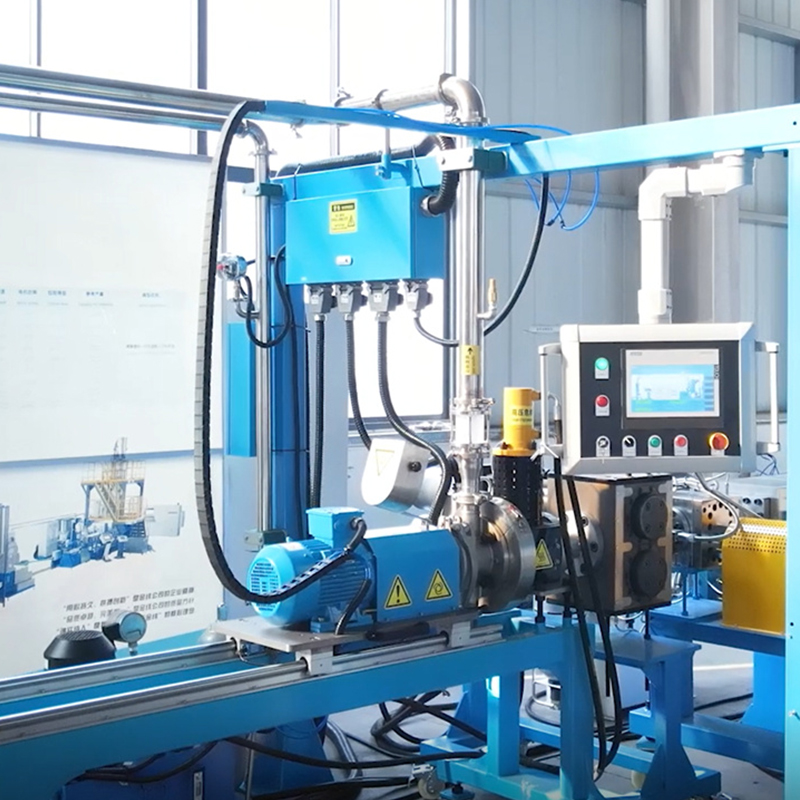 Screw Extruder Underwater Pelletizing System Manufacturers, SuppliersKunwei Langsheng Extrusion Intelligent Equipment Co., Ltd is China custom screw extruder underwater pelletizing system manufacturers and ...View Product →
Water-Ring Hot-Face Cutting
Water-ring hot-face cutting is a hybrid. The cutter runs against the die face inside a small chamber, and pellets are flung through a water ring for cooling. The system is easier to clean than an underwater unit and needs less water flow, which makes it attractive when formulations change frequently. It is a common choice for masterbatch and highly filled compounds, where a controlled die temperature keeps high filler loads stable at the cutting face. A water-ring hot-face cutting granulation system is often the first recommendation for producers who switch between dark and light masterbatches.
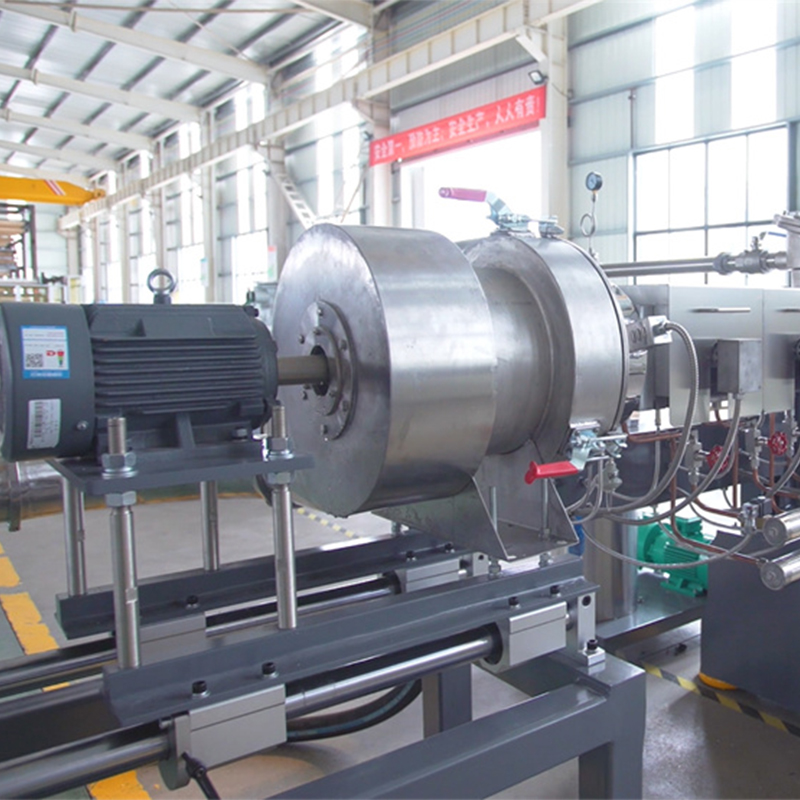 Screw Extruder Water Ring Hot Face Cutting System Manufacturers, SuppliersKunwei Langsheng Extrusion Intelligent Equipment Co., Ltd is China custom screw extruder water ring hot face cutting system manufacturers...View Product →
| Parameter | Strand | Water-Ring Hot-Face | Underwater |
|---|---|---|---|
| Typical throughput | 50-800 kg/h | 100-1,500 kg/h | 300-5,000 kg/h |
| Pellet shape | Cylindrical | Round / oval | Round |
| Water consumption | Low | Medium | High |
| High-filler suitability | Fair | Good | Good |
| Operator attention | High | Medium | Low |
| Fines / dust tendency | Medium | Low | Lowest |
Match the Technology to Your Material and Output
Choosing between these systems is mainly a materials and capacity question. Four parameters decide most selections.
- Melt strength. High-melt-flow polypropylene and highly filled compounds often cannot pull their own strand weight. If a strand sags or breaks, a hot-face granulator eliminates the strand step entirely.
- Filler and additive content. At filler loadings above 50 percent, abrasive minerals accelerate wear on strand dies and cutters. Water-ring and underwater systems confine the process and allow hardened die materials.
- Heat sensitivity. Heat-sensitive or low-viscosity melts, such as TPU and some biodegradable resins, need the shortest molten path possible. Underwater cutting quenches the pellet within milliseconds of leaving the die.
- Throughput target. Strand systems reach practical limits at a few hundred kilograms per hour. For multi-ton lines, underwater pelletizing is the standard solution.
Confirm how the machine builder handles die heating, cutter clearance, and water temperature control before signing off on a design. A one-millimeter change in cutter clearance can shift pellet shape and fines rate noticeably.
Common Pellet Quality Problems and Practical Fixes
Even with the right granulation equipment, pellet quality problems appear when surrounding conditions drift.
Black Specks
Black specks usually come from degraded polymer or carbonized additives stuck on the die face or in the water circuit. Systematic cleaning schedules and a controlled start-up sequence prevent most cases. In underwater systems, a partially heated die at start-up is a frequent source. The full discussion of black specks and bubbles in modified plastics shows how to trace the origin step by step.
Hollow Pellets and Moisture
Hollow pellets or voids are usually caused by water trapped inside the pellet, steam flashing inside the strand, or insufficient drying. Check the extruder venting and the moisture content of the cooling air, and adjust the drying temperature to the polymer's softening point.
Inconsistent Pellet Length
Inconsistent pellet length is usually traceable to cutter wear, die temperature variation, or a loose cutter hub. Checking cutter clearance every shift and rotating blades on a fixed schedule keeps the length distribution tight.
Think Beyond the Granulator: Full-Line Integration
Granulation equipment cannot be selected in isolation. The feeder, extruder, die, water circuit, and classifier define the conditions the pelletizer must work in. A granulator sized for peak extruder capacity will idle when the feeder struggles with a low-bulk-density filler, and a water pump that is too small will overheat and produce agglomerates. This is why many modification plants commission the complete downstream train from a single supplier, with one engineering team accountable for material handling, melt temperature, granulation, and drying. The same logic that drives large-capacity high-filler granulation production lines applies to any new compounding line: process design and equipment selection should be bundled, not patched together. KUNWEI's full-line design service covers the process from feeding to storage, which is the practical meaning of treating granulation as part of a system rather than a standalone machine.
Frequently Asked Questions
Quick answers to the questions buyers ask most often about plastic granulation equipment.
Q1: What is plastic granulation equipment?
Plastic granulation equipment converts molten or solid plastic into uniform granules. In compounding lines, it refers to the pelletizing system - strand, underwater, or hot-face cutting - plus drying, sieving, and storage units.
Q2: What is the difference between a granulator and a pelletizer?
A granulator often grinds solid scrap into chips, while a pelletizer cuts molten polymer into pellets. In the compounding industry, both terms are used loosely, but pelletizing is the melt-phase process.
Q3: How much does plastic granulation equipment cost?
Cost depends on process and capacity. Strand systems are the most economical, underwater systems carry the highest investment, and water-ring sits in between. Compare total cost per ton, including water cooling and drying energy.
Q4: Which pelletizing method produces the least dust?
Underwater pelletizing produces the roundest, nearly dust-free pellets because the melt is cut and quenched in water immediately. Water-ring hot-face cutting is a close second, with far less dust than strand systems.
Q5: What is the best granulation method for highly filled compounds?
For filler loadings above 40 percent, hot-face methods such as water-ring or underwater cutting are safer because they avoid pulling strands that break under their own weight.
Q6: How can I improve pellet uniformity without changing equipment?
Stabilize water temperature, check cutter clearance daily, and clean the die on a fixed schedule. These three actions solve most uniformity complaints before a capital purchase is needed.


