


 ENG
ENG 中文简体
中文简体 русский
 عربى
عربىA compounder once ran a 55% carbon black color concentrate that looked flawless in pellet form. At the molder, the same pellets produced grey streaks on every thin-walled part. The cause was not the pigment supplier, the let-down ratio, or the molding machine. It was the dispersion work done upstream, inside the extruder barrel.
A masterbatch color concentrate is only as good as the mixing that happens before the pellets are made. Color is not coated onto the pellet; it is compounded into it. For that reason, processors who buy color concentrate, and compounders who produce it, need to look beyond the final color and understand the composition, the process, and the equipment that create it.
Content
- 1 What Is a Masterbatch Color Concentrate?
- 2 How Is a Color Concentrate Made?
- 3 How Do You Judge Color Concentrate Quality?
- 4 Equipment Choices That Decide Concentrate Quality
- 5 Frequently Asked Questions
- 5.1 Q1. What is a masterbatch color concentrate?
- 5.2 Q2. What is the difference between masterbatch and colored resin?
- 5.3 Q3. What let-down ratio should I use?
- 5.4 Q4. Why do black specks appear in the final part?
- 5.5 Q5. Can one masterbatch be used for several polymers?
- 5.6 Q6. How do I choose a masterbatch production line?
What Is a Masterbatch Color Concentrate?
Color concentrate, also called color masterbatch, is a granular mixture in which pigments or dyes are pre-dispersed at high concentration in a carrier resin. It is a solid concentrate that is diluted, or let down, into the base polymer during injection molding, film blowing, or extrusion. Most applications use a let-down ratio between 1:20 and 1:100 by weight, which corresponds to a dosage of roughly 1% to 5%.
Three components do the work:
| Component | Function in the concentrate | Typical share |
|---|---|---|
| Pigment system | Delivers color, opacity, and tinting strength (carbon black, titanium dioxide, organic and inorganic pigments) | 15–75% |
| Carrier resin | Carries the pigment and must wet out and blend with the base polymer | 20–70% |
| Additive package | Dispersing waxes, antioxidants, UV stabilizers, processing aids | 2–15% |
These numbers explain why a compounding line must handle very different formulations from one order to the next. A white masterbatch is dominated by titanium dioxide, while a transparent organic color system is mostly carrier and wax. The equipment, not just the recipe, must adapt to both.
Compounding color into a concentrate instead of dosing raw pigment at the press makes sense for three practical reasons:
- Cost: pigment is bought in bulk, and the expensive dispersion work is done once, by the compounder.
- Cleanliness: pellets replace dusty powder, which improves housekeeping and operator safety.
- Consistency: a correctly made concentrate provides repeatable color from batch to batch, which direct pigment dosing rarely achieves.
How Is a Color Concentrate Made?
Making color concentrate is not a simple mix-and-extrude operation. The pigment must first be de-agglomerated, that is, broken into primary particles, then wetted by the carrier and evenly distributed through the melt. The industry standard for this task is a co-rotating twin-screw extruder.
- Pre-blend the pigment, carrier resin, waxes, and additives in a high-speed mixer.
- Feed the blend precisely with loss-in-weight feeders at the main throat.
- Melt and compound in the twin-screw barrel; kneading blocks apply controlled shear to break pigment agglomerates.
- Homogenize with mixing elements so that every pellet carries the same color strength.
- Pelletize with strand, water-ring, or underwater pelletizing, then dry and classify.
Co-rotating twin-screw extruders dominate this process because they combine shear with self-wiping screw geometry and modular screw design. A single-screw extruder, by comparison, lacks the local high shear needed to break down hard agglomerates and offers far less control over residence time.
A complete line is a sequence of units rather than a single machine. The drawing below shows the typical layout of a masterbatch compounding line.
How Do You Judge Color Concentrate Quality?
Appearance alone cannot certify a color concentrate. Two pellets from the same batch can look identical, yet one will produce streaks in the final part. Objective testing is the only reliable route.
| Parameter | What it measures | Typical acceptance level |
|---|---|---|
| Dispersion rating (ISO 18553) | Size and number of undispersed pigment agglomerates in a thin plaque | Rating ≤ 3 for most critical film applications |
| Filter pressure value (FPV) | Pressure rise through a filter pack under constant melt flow; high values mean poor dispersion or gels | Lower than the reference; check against an approved masterbatch |
| Color difference ΔE | Difference between batch and standard color | ΔE ≤ 1.0 for critical shades |
| Moisture content | Water absorbed by the carrier and additives | Below 0.1% for most polyolefin systems |
ISO 18553 is the common method for assessing pigment dispersion. A laboratory presses a thin plaque from the concentrate and counts the size and number of undispersed agglomerates under magnification. The resulting rating, typically between 1 and 6, is far more useful than a visual check.
Two defects dominate customer complaints. The first is black specks: dark particles that appear when pigment agglomerates or degraded polymer are not removed by the melt filter. The second is streaking, usually caused by incomplete melting, an incorrect let-down ratio, or a screw design with too little mixing. The relationship between process conditions and such defects is explained in how black specks and bubbles appear in modified plastics.
Equipment Choices That Decide Concentrate Quality
Whether you are equipping a new line or upgrading an existing one, four decisions determine whether the concentrate will meet dispersion, cost, and consistency targets.
- Specific torque. Higher specific torque lets the screw transfer more shear energy without raising melt temperature. That matters for difficult pigments in organic color systems. Lines that must run high loadings consistently benefit from a dedicated high-performance twin-screw extruder
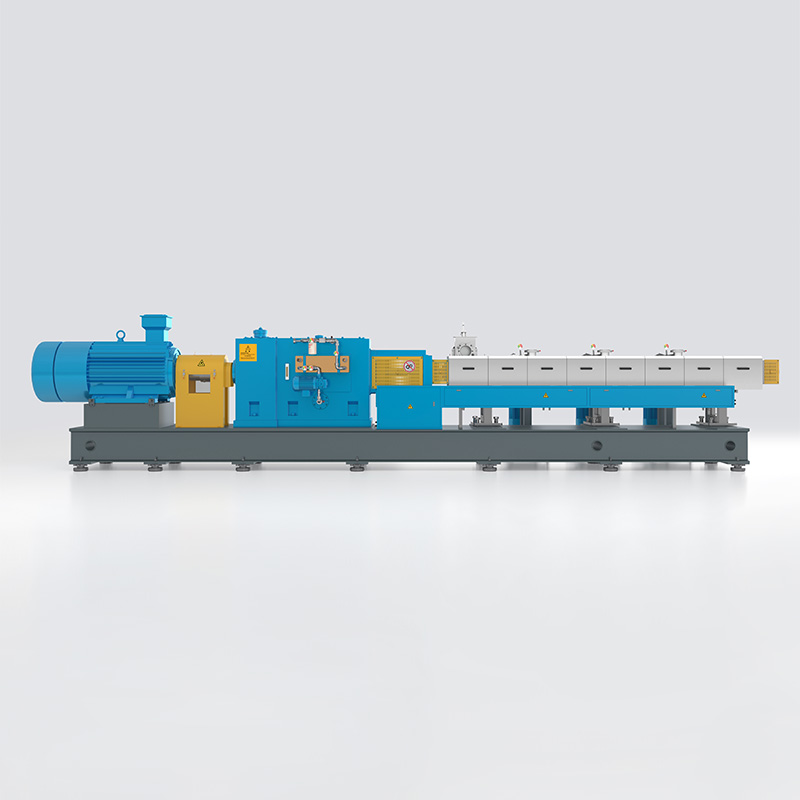 Engineering Plastic Extrusion Production Line ManufacturersKunwei Langsheng Extrusion Intelligent Equipment Co., Ltd is China KTS High Performance engineering plastic extrusion production line man...View Product → with a design specific torque up to 14 Nm/cm³.
 - Feeding accuracy. Pigments with poor flow, carbon black, and very fine ground additives must be metered gravimetrically. A side feeder
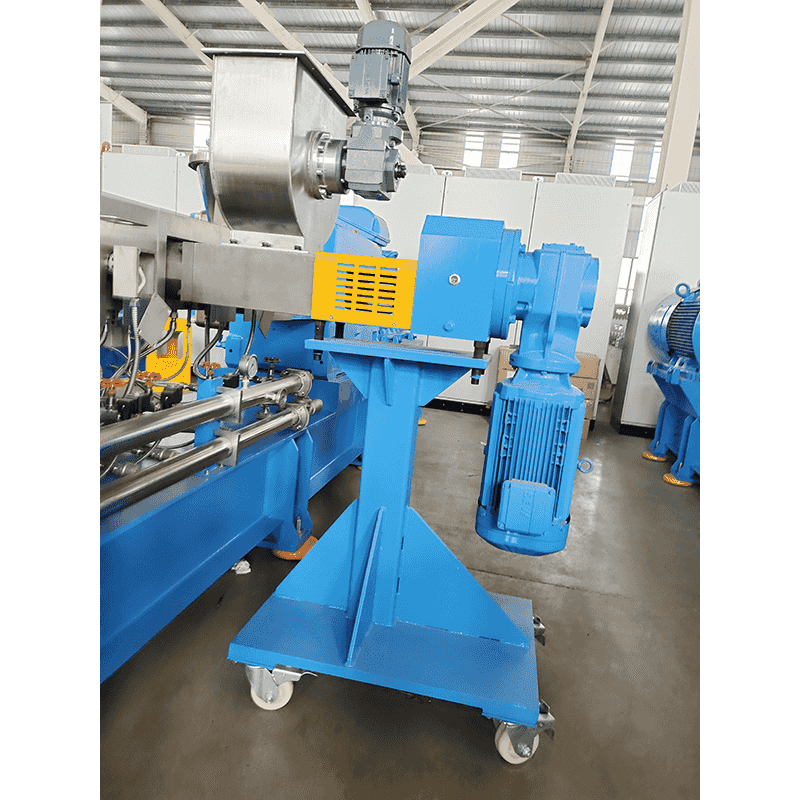 Custom Screw Extruder Side Feeder Manufacturers, SuppliersKunwei Langsheng Extrusion Intelligent Equipment Co., Ltd is China custom screw extruder side feeder manufacturers and screw extruder sid...View Product → is often the right choice when the pigment or filler is added downstream of the melting zone, which protects heat-sensitive carriers and increases the filling level.
 - Pelletizing method. Strand pelletizing is flexible and low cost; a modern underwater pelletizing system
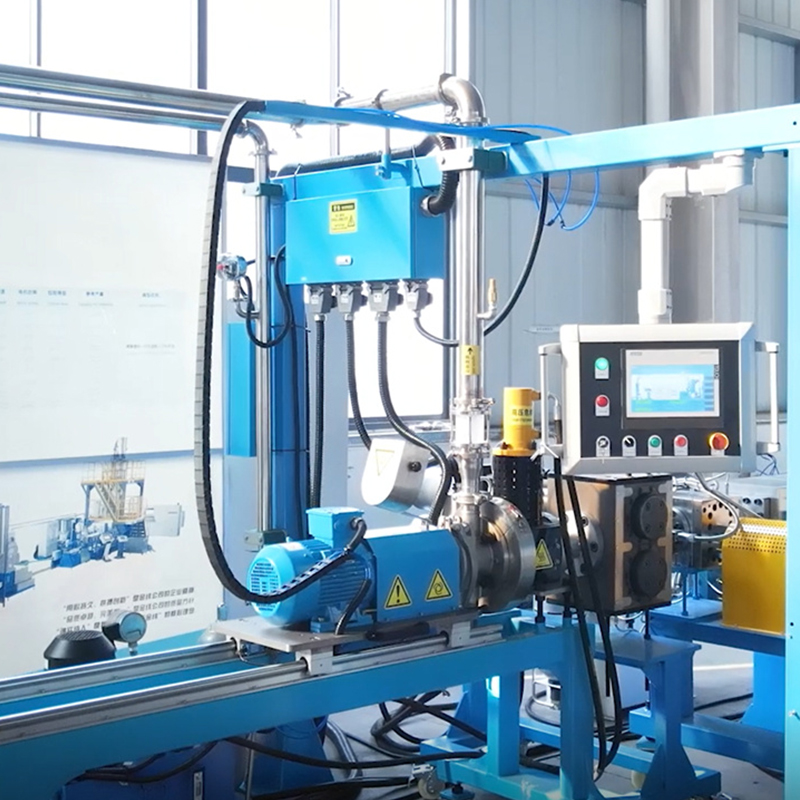 Screw Extruder Underwater Pelletizing System Manufacturers, SuppliersKunwei Langsheng Extrusion Intelligent Equipment Co., Ltd is China custom screw extruder underwater pelletizing system manufacturers and ...View Product → gives higher output, lower dust, and better handling of sticky or soft concentrates.
 - Screw design and L/D ratio. A longer barrel with dedicated mixing zones provides the residence time and energy needed for full color development. Too much shear, however, degrades heat-sensitive carriers, so the screw configuration must be matched to the pigment type.
The practical effect of torque class on output is shown below:
Experience with complete masterbatch lines also matters. A full-line supplier designs the feeder, extruder, melt filter, and pelletizer as one system. For an existing line, retrofitting can be as effective as a new purchase: adding a side feeder, changing screw elements, or upgrading the pelletizing section are common paths to better color consistency. A masterbatch twin-screw extrusion pelletising line project, for example, can raise pigment loading and cut changeover time without replacing the whole plant.
Frequently Asked Questions
Q1. What is a masterbatch color concentrate?
It is a concentrated mixture of pigments, carrier resin, and additives supplied as free-flowing pellets. It is added to the base polymer at a small percentage to deliver the final color.
Q2. What is the difference between masterbatch and colored resin?
A masterbatch is a concentrate that must be diluted; a colored resin is already pigmented to the final concentration. Masterbatch gives processors the flexibility to change colors without changing the resin grade.
Q3. What let-down ratio should I use?
Typically 1% to 5% by weight. The exact value depends on pigment strength, wall thickness, and target shade; always follow the data sheet and run a small trial before production.
Q4. Why do black specks appear in the final part?
Black specks usually come from undispersed pigment agglomerates, degraded polymer, or contaminated melt. A correct dispersion rating, suitable screw design, and proper barrel temperature can eliminate most causes.
Q5. Can one masterbatch be used for several polymers?
Only if the carrier resin is compatible. A polyolefin masterbatch is not suitable for PET or PC. Always check carrier compatibility before switching the base polymer to avoid haze or poor adhesion.
Q6. How do I choose a masterbatch production line?
Evaluate specific torque, feeder accuracy, pelletizing technology, screw configuration, and the supplier's references in your material. A supplier with complete-line experience can prevent integration failures between the feeder, extruder, and pelletizer.


