


 ENG
ENG 中文简体
中文简体 русский
 عربى
عربىA PP board line producing 1.5 mm sheet at 350 kg/h runs fine in the morning, then thickness drifts by 0.2 mm after a screen pack change. The operator reaches for the haul-off control, but the real cause is usually die temperature losing stability as extruder back-pressure changes. In PP and PE board extrusion, quality depends on the whole line — extruder, die, roll stack, cooling conveyor and cutter — working as one system. Understanding those interactions is what lets a team find faults quickly and keep the board in tolerance.
Content
- 1 What Is a PP PE Board Extrusion Line?
- 2 Core Components That Decide Board Quality
- 3 Process Temperatures That Determine Sheet Quality
- 4 Output Rates and Line Sizing
- 5 PP vs PE: How Material Behaviour Changes the Setup
- 6 Common Applications of PP and PE Board
- 7 How to Choose a PP PE Board Extrusion Line
- 8 Frequently Asked Questions
- 8.1 Q1. What is the difference between PP and PE board extrusion?
- 8.2 Q2. What thickness range can a PP board extrusion line produce?
- 8.3 Q3. Can the same line process both PP and PE?
- 8.4 Q4. How much does a PP PE board extrusion line cost?
- 8.5 Q5. Why does the board have wavy edges or thickness variation?
- 8.6 Q6. Can a twin-screw extruder be used for PP board production?
What Is a PP PE Board Extrusion Line?
A PP PE board extrusion line is a continuous production system that melts polypropylene or polyethylene pellets and shapes them into flat sheet or board. Typical finished thickness is 0.3–30 mm, and board width is usually 1,000–2,500 mm depending on the flat die and polish roll width.
The process runs in six stages, and every stage must be matched to the next or defects appear.
- Feeding — pellets and additives are metered into the hopper; gravimetric feeders stabilise output when the formulation changes.
- Melting and conveying — the screw melts the polymer and builds stable pressure; insufficient torque shows up as surging.
- Filtration and die — a screen changer removes gels and contaminants, and the flat die spreads melt uniformly across the width.
- Polishing — a three-roll stack presses the melt to the target gauge and controls surface gloss.
- Cooling — rollers or cooling beds remove heat gradually to avoid warpage and residual stress.
- Hauling and cutting — the puller keeps tension constant; a shear, saw or winder makes the final length.
The schematic below shows a typical single-screw-based line. For formulations that need intensive mixing — filled PP, colour masterbatch or recycled content — co-rotating twin-screw extruders are often preferred as the melting unit because of their higher dispersive mixing capacity.
Core Components That Decide Board Quality
The extruder, die and polish roll stack form the quality triangle of a board line. If one is undersized or mismatched, the board shows it immediately. The table lists the main components and the typical defects they cause when the match is wrong.
| Component | Main function | Typical defect if mismatched |
|---|---|---|
| Extruder | Melts polymer, delivers uniform melt | Output surging, melt temperature fluctuation |
| Screen changer | Removes gels and contaminants | Black specks, die lines |
| Flat die | Distributes melt across the width | Thick or thin edges, uneven gauge |
| Polishing stack | Sets thickness and surface finish | Wavy surface, gloss differences |
| Cooling section | Removes heat without introducing stress | Curling, flatness loss |
| Haul-off and cutter | Maintains tension, cuts to length | Length variation, scratched surface |
Screw torque is the most under-bought specification on board lines. A line that runs soft pellets at 5 Nm/cm³ may stall when the same screw meets 30% recycled flake or calcium carbonate filler. Producers who plan to change formulations later should buy a higher-torque machine from the start.
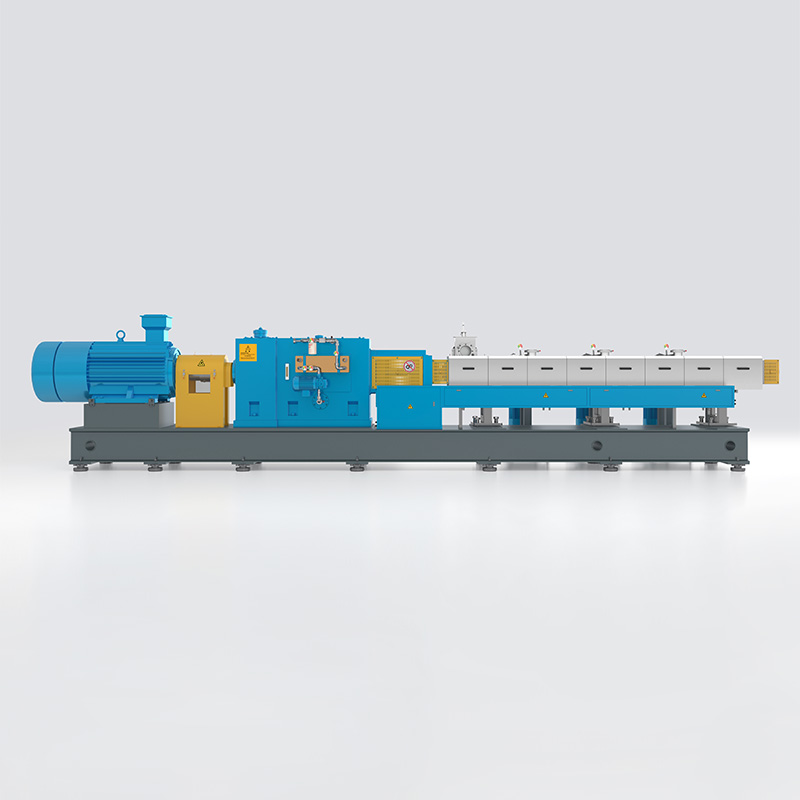 KTS High Performance Twin-Screw Extruder for Modified Engineering PlasticsThe KTS series offers a specific torque of 14 Nm/cm³, making it suitable for high-viscosity and modified engineering plastics. If your line may process recycled flake or mineral fillers, this higher-torque design helps maintain throughput and avoid stalling.View Product →
Process Temperatures That Determine Sheet Quality
PP and PE are semicrystalline. The barrel must heat the polymer well above its melting point, while die and roll temperatures control surface finish and final crystallinity. Correct zone settings are the fastest way to cut scrap.
| Zone | PP setpoint | HDPE setpoint |
|---|---|---|
| Feed zone | 50–80 °C | 50–70 °C |
| Barrel zone 1 | 180–200 °C | 170–190 °C |
| Barrel zones 2–4 | 200–230 °C | 190–220 °C |
| Adapter and melt pump | 210–230 °C | 200–220 °C |
| Flat die | 200–230 °C | 190–220 °C |
| Roll stack | 60–100 °C | 60–90 °C |
The melt temperature windows of the two polymer families are compared below.
A practical rule: if the board surface turns matte or rough, check the die temperature first. A 20 °C drop at the die lip can create the same defect as a worn roll. Keep a temperature log per product and compare it with past good runs.
Output Rates and Line Sizing
Output decides how many square metres of board the line can produce per hour, and it is the first number buyers compare. The chart shows typical output ranges for extrusion-grade PP sheet on single-screw lines of different screw diameters.
Sizing is a balance between screw output, die width and roll width. A 120 mm extruder at 400–600 kg/h can fill a 1,200 mm die with 2 mm board; the same throughput on a 2,500 mm die produces thinner sheet unless screw speed and die gap are adjusted. Always size from your target product list, not from maximum screw output.
For large capacity, a high-volume extruder with deeper flights keeps output high at lower screw speed, which lowers melt temperature and energy cost per tonne.
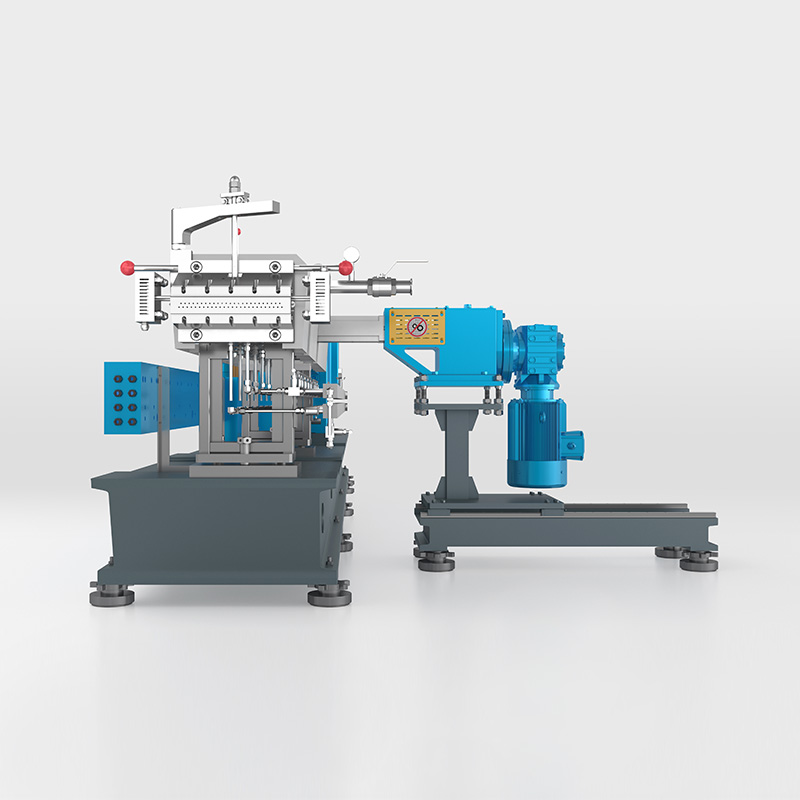 KTD High Volume Extruder with Deep Screw Flights for High-Fill ApplicationsThe KTD series features a specific torque of 11 Nm/cm³ and a high slot depth, designed for high-filling, reactive, and heat-sensitive materials. It suits large-capacity lines where lower screw speed and deeper flights can reduce melt temperature and energy costs.View Product →
PP vs PE: How Material Behaviour Changes the Setup
Selecting PP or PE changes machine settings more than most buyers expect. The radar chart summarises the property balance that drives board design and process decisions.
Three differences matter most on the floor. HDPE melts 10–20 °C lower than PP, so barrel temperatures are reduced. PE shrinks more on cooling, so the roll stack and cooling section must control flatness instead of simply pulling the sheet tight. PP gives a stiffer board; PE gives better impact strength and chemical resistance at low temperature.
| Property | PP | HDPE | Effect on the line |
|---|---|---|---|
| Density (g/cm³) | 0.90–0.91 | 0.94–0.96 | Higher board weight per square metre for PE |
| Melting range | 160–170 °C | 130–140 °C | Lower barrel setpoints for HDPE |
| Rigidity | Higher | Moderate | PP allows down-gauging for the same stiffness |
| Shrinkage on cooling | 1.0–2.5% | 2.0–4.0% | HDPE needs more controlled cooling to stay flat |
| Surface gloss | Good | Lower | Roll temperature set higher for PP gloss |
Common Applications of PP and PE Board
PP and PE board markets overlap, but each material leads in different categories. Matching material to application is usually the first question customers ask.
- Thermoforming packaging: PP sheet for trays, food containers and ready-meal packs; stable thickness is needed for even wall distribution.
- Stationery and office supplies: transparent PP board for folders, presentation covers and binders; high gloss and low haze matter here.
- Construction and formwork: PE board for protective liners, cable spacers and reusable formwork panels; impact strength and moisture resistance are key.
- Automotive interior: PP board for boot liners and trim backing; long-term heat resistance and dimensional stability are critical.
- Chemical and food contact: PE cutting boards and tank liners; resistance to chemicals and cleaning agents is more important than gloss.
A producer switching between applications changes line settings, but the same line usually handles the whole range if the screw and roll stack were specified for it.
How to Choose a PP PE Board Extrusion Line
A board line is a 10-to-20-year investment. The five checks below prevent the most common mistakes in new line projects.
- Match torque to the formulation roadmap. If future products may include fillers, recycled content or flame retardants, choose a higher-torque extruder now; retrofitting torque later is far more expensive.
- Size die width and thickness to your actual product list. A wide die is efficient for wide board but wasteful for a narrow product run three days a week.
- Inspect the polishing roll stack. Roll diameter, chrome finish, independent gap adjustment and cooling circuits define the maximum gloss and flatness you can sell.
- Check haul-off and cutter at maximum line speed. Many lines are limited by downstream pulling and cutting long before the extruder reaches its output.
- Confirm the supplier’s support structure. Commissioning, spare parts and process training decide how fast the line reaches design output.
Screw torque has the strongest effect on long-term flexibility. This torque and power analysis explains why the power system should never be under-sized.
If you already run a line and the constraint is capacity or product changeover, a refurbishment project can modernise the extruder and downstream at lower capital cost.
Finally, be realistic about automation. A basic line with manual screen changing is cheaper to buy and easier to maintain; tight tolerances or a small crew justify automatic gauging. For standard products, a cost-effective series covers the core process and leaves budget for the automation that matters most.
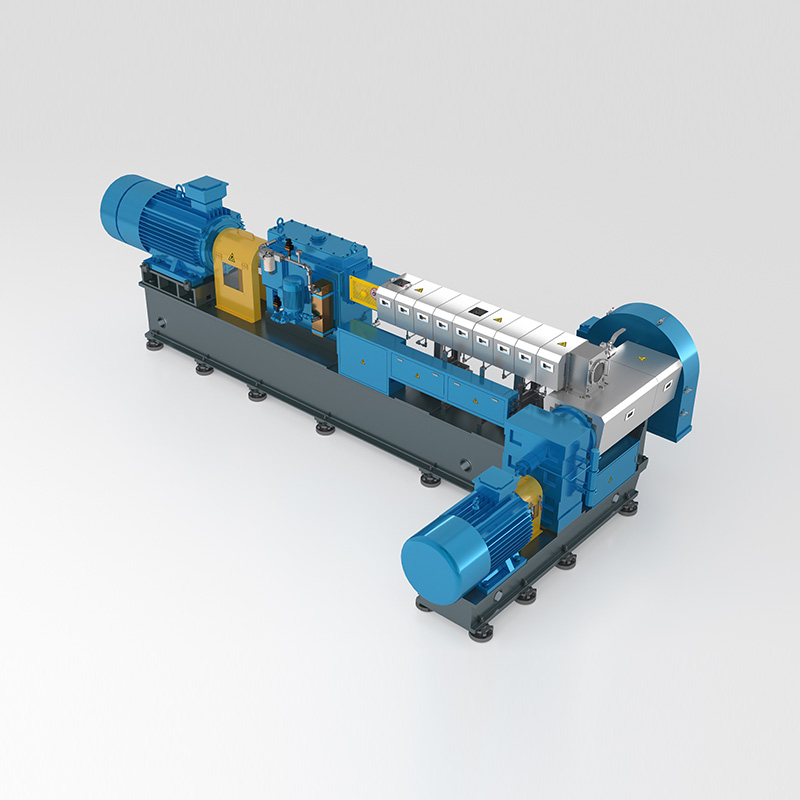 ECO Cost-Effective Extruder Series for Budget-Conscious CompoundersThe ECO series provides a specific torque of 9 Nm/cm³, offering an economical option for producing modified engineering plastics. It matches the needs of standard products, allowing you to allocate budget toward automation or other process controls that matter most.View Product →
Frequently Asked Questions
Q1. What is the difference between PP and PE board extrusion?
PP board is stiffer, more transparent and resists higher temperatures, while PE board provides better chemical resistance and low-temperature impact strength. The main line differences are barrel temperature, roll temperature and cooling control.
Q2. What thickness range can a PP board extrusion line produce?
A typical line covers 0.3 mm to 30 mm. Thin sheet relies on precise roll gap and high line speed; thick board needs slower speed and a longer cooling section to prevent sink marks.
Q3. Can the same line process both PP and PE?
Yes, most lines can switch between PP and PE. The changeover requires new temperature setpoints, roll temperature adjustment and usually a purge compound. The screw must be designed for both melt viscosities.
Q4. How much does a PP PE board extrusion line cost?
Cost depends on extruder size, die width, downstream configuration and automation level. To get a realistic number, send the supplier your target products, thickness range, width and annual output.
Q5. Why does the board have wavy edges or thickness variation?
The common causes are unstable melt temperature, a worn screw or die lip, incorrect roll gap and haul-off speed mismatch. Check melt pressure variation first — it usually points to the extruder or screen pack.
Q6. Can a twin-screw extruder be used for PP board production?
Yes, twin-screw extruders are used when the board formulation includes pigments, fillers or recycled flake that need intensive mixing. They also enable in-line compounding, producing board directly from a custom formulation.


