


 ENG
ENG 中文简体
中文简体 русский
 عربى
عربىIn the modern pharmaceutical industry, the demands on equipment for drug production are becoming increasingly stringent. Traditional formulation methods are struggling to meet the needs for drug homogenization, solubility, and production efficiency. In recent years, hot-melt extruders for medicine and pharmacy have been widely used in the pharmaceutical industry, becoming an important piece of equipment for pharmaceutical companies to optimize drug formulations and improve production efficiency. So, why are more and more pharmaceutical companies choosing hot-melt extruders for drug production?
1. Improving Drug Homogenization and Solubility
Hot-melt extruders uniformly mix drugs and excipients through high temperature and high shear force, forming a homogeneous molten material. This homogenization treatment significantly improves drug solubility and bioavailability, especially suitable for the following situations:
Poorly soluble drugs: Hot-melt extrusion can increase the dissolution rate of drugs in water.
Controlled-release formulations: By adjusting the extrusion process and the proportion of excipients, sustained-release or controlled-release effects can be achieved.
Drug uniformity: Higher uniformity of drugs in each batch of production ensures accurate dosage and meets GMP requirements.
In this way, pharmaceutical companies can produce higher-quality, more stable drug formulations, improving the patient's medication experience.
2. Suitable for Various Drug Formulations
Hot-melt extruders have wide applicability in pharmaceutical production and can be used for:
Tablet formulations
Mixing drugs and excipients and extruding them into strips or granules, then processing them into tablets.
Oral films
Hot-melt extrusion technology can quickly form homogeneous films, improving the drug dissolution rate.
Sustained-release/controlled-release formulations
Adjusting excipients and temperature to achieve slow drug release and prolong efficacy.
Solid dispersions
Uniformly dispersing drugs in a polymer matrix to improve the absorption of poorly soluble drugs.
This versatility makes hot-melt extruders an indispensable core equipment in modern pharmaceutical production.
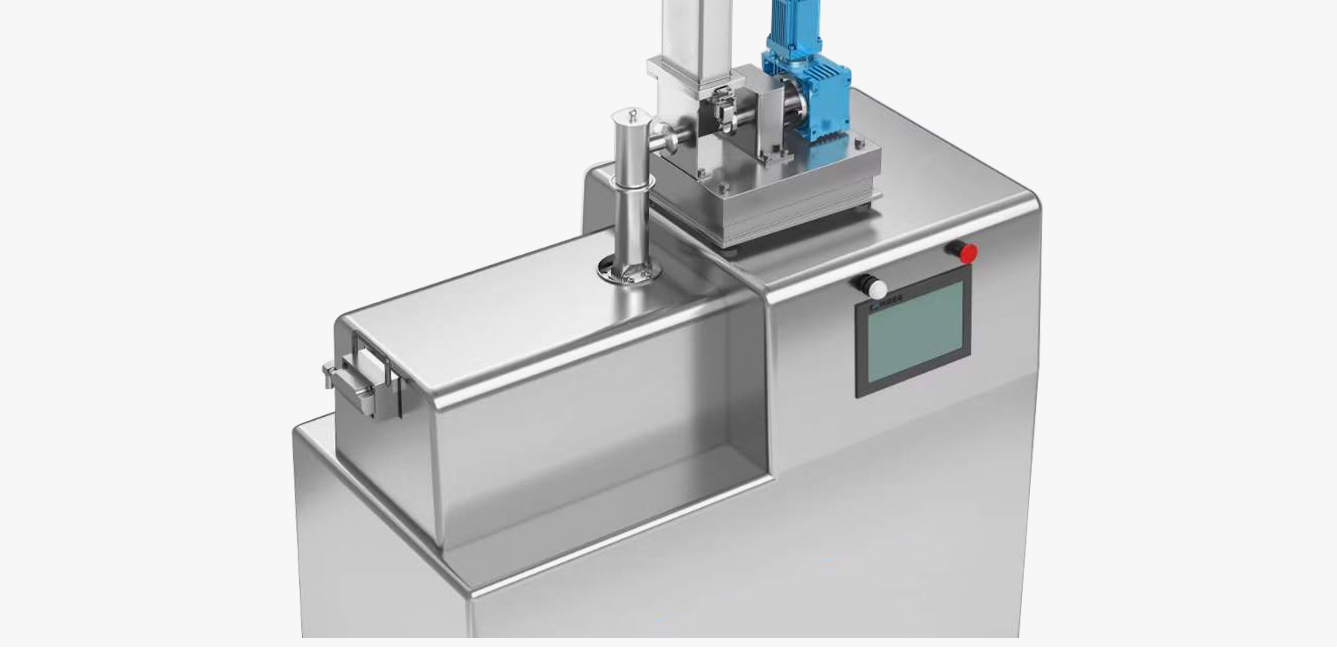
3. High Production Efficiency and Cost Savings
Compared to traditional pharmaceutical manufacturing processes, hot-melt extrusion offers significant efficiency advantages:
Continuous production: Hot-melt extruders enable continuous production, reducing downtime and changeover times, and increasing output.
High automation: Modern equipment is equipped with automatic temperature control, feeding, mixing, and extrusion systems, reducing manual intervention.
Shorter production cycle: Drug homogenization and shaping are completed simultaneously, reducing the multi-step operations of traditional processes.
These advantages not only improve production efficiency but also effectively reduce labor costs and energy consumption, bringing economic benefits to pharmaceutical companies.
4. Ensuring Drug Quality and Safety
In the pharmaceutical industry, drug quality and safety are paramount. Hot-melt extrusion excels in this aspect:
High-temperature sterilization: The high temperature during the extrusion process effectively reduces the risk of microbial contamination.
Stable material mixing: Drugs and excipients are thoroughly mixed, ensuring the uniformity of each batch of medication.
Controllable process parameters: Temperature, shear force, and extrusion speed can be precisely controlled, ensuring stable drug performance.
Through these features, hot-melt extrusion helps pharmaceutical companies meet GMP standards and improve the competitiveness of their products in domestic and international markets.
5. Environmental Protection and Energy Saving Advantages
Hot-melt extruders do not require the use of large amounts of solvents during the production process, reducing the discharge of chemical waste liquids and lowering energy consumption. For modern pharmaceutical companies, this not only meets environmental requirements but also reduces solvent procurement costs and waste disposal costs.


